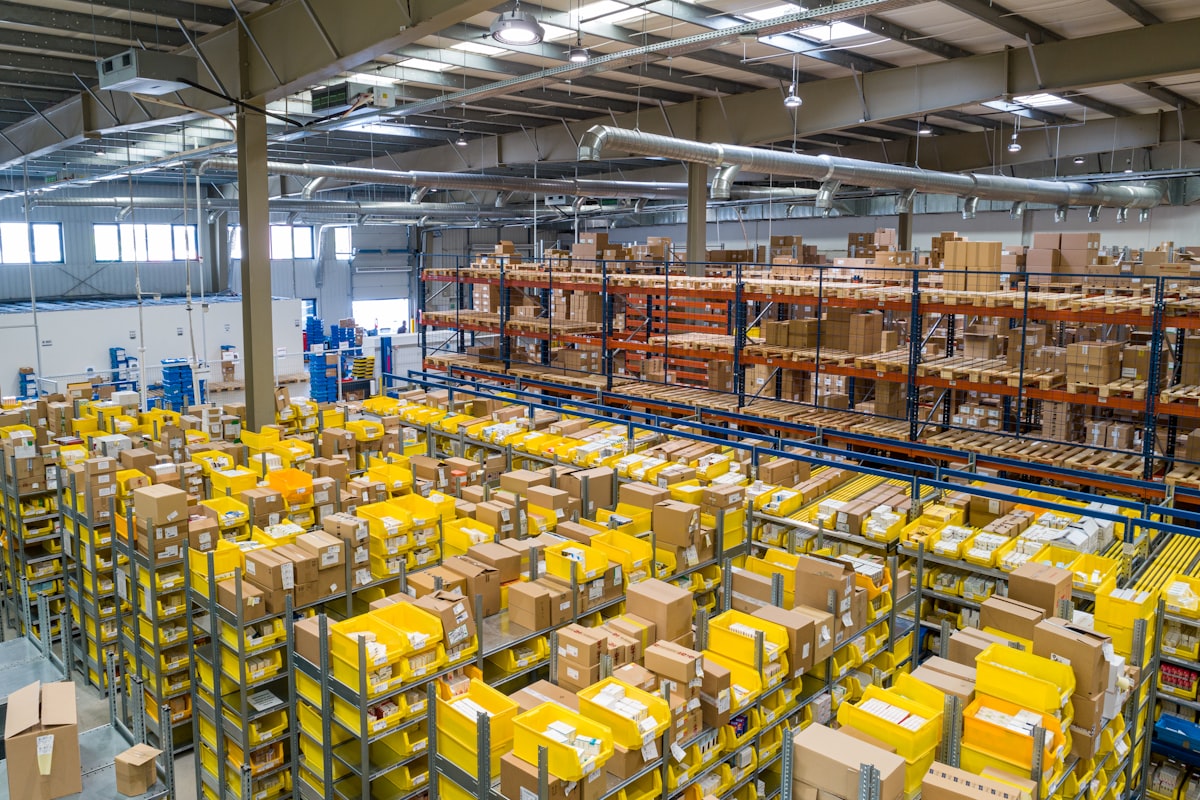
From Spreadsheets to Smart Warehousing
Many growing businesses start with spreadsheets or basic inventory modules, which work fine when you have one warehouse and a handful of SKUs. But as order volumes increase and product lines expand, these tools become bottlenecks that slow fulfilment and introduce errors that damage customer relationships and create hidden operational costs.
A dedicated Warehouse Management System transforms your warehouse from a cost centre into a competitive advantage. By optimising how goods are stored, picked, packed, and shipped, a WMS can dramatically reduce order processing time and labour costs while improving accuracy from typical manual rates of 95-97% to above 99.5%. That difference — from one error per twenty orders to one per two hundred — has a massive impact on customer satisfaction and returns processing cost.
The transition does not have to be abrupt. Many WMS implementations start with core receiving and shipping functions, then expand to advanced features like wave planning, cross-docking, task interleaving, and labour management as the team becomes comfortable with the system. This phased approach reduces risk and allows the warehouse team to adapt gradually without overwhelming them with change.
The decision to invest in a WMS typically becomes clear when one or more of these symptoms appear: orders are regularly shipped late, picking errors exceed 2-3%, staff spend more time looking for products than picking them, you cannot accurately tell a customer whether an item is in stock, or adding more staff is not proportionally increasing output. These are signs that the problem is systemic, not just about effort.
Receiving and Put-Away Optimisation
Efficient warehousing starts at the receiving dock. A WMS streamlines the receiving process by matching inbound deliveries against purchase orders, guiding receiving staff through quantity and quality checks, and directing items to their optimal storage locations. Without system guidance, staff tend to put items in the nearest empty spot, which saves time at receiving but costs far more time during picking.
Directed put-away rules consider multiple factors: item dimensions and weight, storage requirements like temperature or hazmat classification, velocity data that indicates how frequently the item is picked, and current space availability. A fast-moving item should be placed in an easily accessible floor-level bin near the packing stations, while a slow-moving bulky item belongs on an upper rack in a distant aisle.
Cross-docking capabilities allow the WMS to identify inbound goods that are already needed for outbound orders and route them directly from receiving to shipping without ever entering storage. This reduces handling, speeds fulfilment for urgent orders, and minimises the inventory that needs to be stored, picked, and managed.
Quality inspection workflows can be embedded in the receiving process for items that require checks before being made available for sale. The WMS can hold inspected goods in a quarantine zone until quality approval is recorded, preventing premature allocation of goods that may need to be returned to the supplier.
Intelligent Slotting and Pick Path Optimisation
Modern WMS platforms analyse order history to recommend optimal bin locations for each product. High-velocity items are placed in easily accessible zones at ergonomic heights, while slow-moving stock occupies less premium space in higher racks or further aisles. This slotting strategy alone can reduce walking time by 30-40% and decrease picker fatigue significantly, reducing both labour cost and injury risk.
Pick path algorithms group orders by zone and calculate the most efficient walking route through the warehouse. Wave picking, batch picking, and zone picking strategies can be configured based on order profiles, with the system automatically selecting the best approach for each batch. A single-item order might be picked individually, while a batch of twenty single-SKU orders for the same product can be picked in one trip to that location.
Dynamic slotting takes this further by continuously adjusting bin assignments based on changing demand patterns. A product that suddenly trends upward is automatically flagged for relocation to a more accessible position. Seasonal items are moved to prime locations before their peak period and relocated afterward. This ongoing optimisation ensures the warehouse layout always reflects current demand rather than the demand pattern from when locations were originally assigned.
The financial impact of pick path optimisation is substantial and measurable. In a warehouse where picking labour represents 50-60% of total labour cost, a 30% reduction in walking time translates directly to either cost savings or increased throughput capacity without additional headcount. For a warehouse with twenty pickers, this can represent savings equivalent to six full-time positions — or the ability to process 30% more orders without hiring.
Packing and Quality Control
The packing station is where picking accuracy is verified before shipments leave the building. A WMS-guided packing process requires scanners to confirm each item against the order, catching picking errors at the last opportunity before they reach the customer. This verification step, while adding a few seconds per order, dramatically reduces the cost of returns, re-shipments, and customer service interactions.
Automated carton selection based on item dimensions reduces shipping costs and packaging waste. The WMS calculates the optimal box size for each order, preventing the common practice of using whatever box is within reach. Over-boxed shipments waste packaging material and increase dimensional weight charges from carriers, both of which add cost that is easily avoided with system-guided carton selection.
Packing documentation — pick lists, packing slips, customs declarations for international shipments, and any required compliance documents — is generated automatically and can be printed at the packing station. This eliminates the manual document preparation that often delays shipments and introduces errors, particularly for international orders with complex documentation requirements.
Quality control checks can be integrated into the packing workflow for specific products or customers. High-value items might require a photographic record before sealing. Certain customers might require specific labelling or packaging standards. The WMS enforces these requirements automatically, ensuring compliance without relying on individual packer knowledge.
Carrier Integration and Shipping Automation
Direct integration with shipping carriers eliminates manual label creation and rate shopping. The WMS can automatically select the most cost-effective carrier based on package dimensions, weight, destination, service level requirements, and any customer-specific carrier preferences. When the cheapest option for a particular shipment saves even a small amount, the aggregate savings across thousands of shipments per month are significant.
Multi-carrier support provides both cost optimisation and operational resilience. When a primary carrier experiences delays, capacity constraints, or service disruptions — common during peak seasons, severe weather events, or industrial action — the system can automatically route shipments to alternative carriers without manual intervention, maintaining delivery commitments even during disruptions.
Real-time tracking information flows back into the system and can be shared with customers automatically through email or SMS notifications at each milestone — shipped, in transit, out for delivery, delivered. This end-to-end visibility from order placement to delivery reduces customer service enquiries about order status by 40-60% and builds trust with buyers who can see exactly where their package is at any time.
Shipping analytics identify cost reduction opportunities that are invisible without data. Which carriers are most cost-effective for which routes? How much are you spending on address correction surcharges that could be eliminated with validation at order entry? Are dimensional weight charges indicating systematic over-packing? These insights drive continuous improvement in shipping cost and performance.
Labour Management and Performance Visibility
WMS platforms track individual and team productivity across all warehouse activities — receiving, put-away, picking, packing, and shipping. This data enables fact-based workforce management, identifying top performers, detecting training needs, and providing the metrics needed to set realistic performance standards.
Task interleaving optimises labour utilisation by directing workers to the most productive next task based on their current location and equipment. A forklift operator who just completed a put-away in Zone B might be directed to a replenishment task in the adjacent zone rather than returning empty to the receiving dock. This continuous optimisation of worker movement reduces idle time and increases throughput without adding staff.
Labour planning tools use historical data and current order volumes to forecast staffing needs by shift. If Tuesday afternoons consistently see higher order volumes, the system recommends scheduling additional pickers. If receiving volumes spike on Mondays due to supplier delivery patterns, dock staffing can be adjusted accordingly. This data-driven scheduling replaces guesswork with evidence.
Performance dashboards visible to warehouse staff — not just management — create transparency and healthy competition. When pickers can see their own rates alongside team averages, many naturally increase their productivity. The key is using data for coaching and improvement, not punishment. Celebrating high performers and supporting those who struggle creates a culture of continuous improvement.
Returns Processing and Reverse Logistics
Returns are an unavoidable reality, particularly in e-commerce. A WMS streamlines the returns process by providing a structured workflow for receiving returned items, inspecting their condition, determining disposition (restock, refurbish, or dispose), and updating inventory records. Without a systematic returns process, returned items pile up in a corner of the warehouse, tying up inventory value and floor space.
Automated disposition rules speed up processing. Items returned within the standard window in original packaging might be restocked immediately. Items with opened packaging might be regraded for clearance sale. Items past the return window might be routed to a supervisor for exception handling. Each path is defined in advance, enabling returns processors to work efficiently without case-by-case decision-making.
Integration with the order management and finance systems ensures that refunds, exchanges, and credit notes are triggered automatically when the return is processed in the warehouse. This eliminates the delay between physical receipt and financial processing that frustrates customers and complicates accounting reconciliation.
Returns analytics reveal patterns that can reduce future return rates. If a specific product is returned frequently for the same reason, that signals a product listing issue, quality problem, or sizing concern that can be addressed proactively. The warehouse data on return reasons becomes valuable input for merchandising, quality, and marketing teams.
How Dualbyte Can Help
Implementing a warehouse management system is a significant operational undertaking that touches every part of your fulfilment process — from receiving and put-away through picking, packing, and shipping. Dualbyte partners with businesses to plan, implement, and optimise WMS solutions that integrate seamlessly with your existing ERP, e-commerce platforms, and shipping carriers, ensuring that the system works as a connected part of your operations rather than an isolated tool.
Our warehouse digitisation approach starts with an on-site assessment of your current layout, workflows, and pain points. We then configure the WMS to match your specific requirements — whether that means setting up directed put-away rules for your bin structure, configuring pick path optimisation for your warehouse zones, or integrating barcode scanning workflows that your team can adopt without disruption. We also handle the integration work that connects your WMS to upstream order management and downstream carrier systems for end-to-end fulfilment visibility.
Whether you are moving from spreadsheets to your first WMS or upgrading an existing system that no longer meets your throughput requirements, Dualbyte can guide the transition with minimal disruption to your daily operations. Get in touch with our team to discuss your warehouse challenges and explore how a properly implemented WMS can transform your fulfilment capability.
Need help with implementation?
Get a free consultation with the DualByte team for your business technology needs.