What Is the Internet of Things?
The Internet of Things, commonly referred to as IoT, describes the network of physical devices embedded with sensors, software, and connectivity that enables them to collect, exchange, and act on data without requiring direct human intervention. From a thermostat that learns your temperature preferences to an industrial sensor that predicts machine failure before it occurs, IoT represents a fundamental expansion of the internet from a network connecting people to a network connecting everything. The scale of this expansion is staggering: industry analysts estimate that there will be more than thirty billion connected devices worldwide by 2030, far exceeding the global human population.
The concept of connecting everyday objects to a network is not entirely new. Vending machines were networked to report inventory levels as early as the 1980s, and industrial SCADA systems have monitored infrastructure for decades. What has changed is the convergence of several technological advances that have made IoT economically viable at massive scale. Sensors have become extraordinarily cheap, with basic units costing less than a dollar. Wireless connectivity options have proliferated, from Wi-Fi and Bluetooth to purpose-built IoT protocols like LoRaWAN and NB-IoT that can reach devices kilometres away on minimal power. Cloud platforms provide virtually unlimited capacity to store, process, and analyse the data that connected devices generate.
IoT creates value by bridging the gap between the physical and digital worlds. Before IoT, information about physical conditions, whether the temperature in a warehouse, the vibration level of a motor, or the location of a delivery truck, existed only in the physical domain and could be accessed only by a person physically present at that location. IoT digitises this information, making it available for remote monitoring, automated analysis, and integration with business systems. This digitisation enables faster decision-making, predictive maintenance, resource optimisation, and entirely new services and business models that were previously impossible.
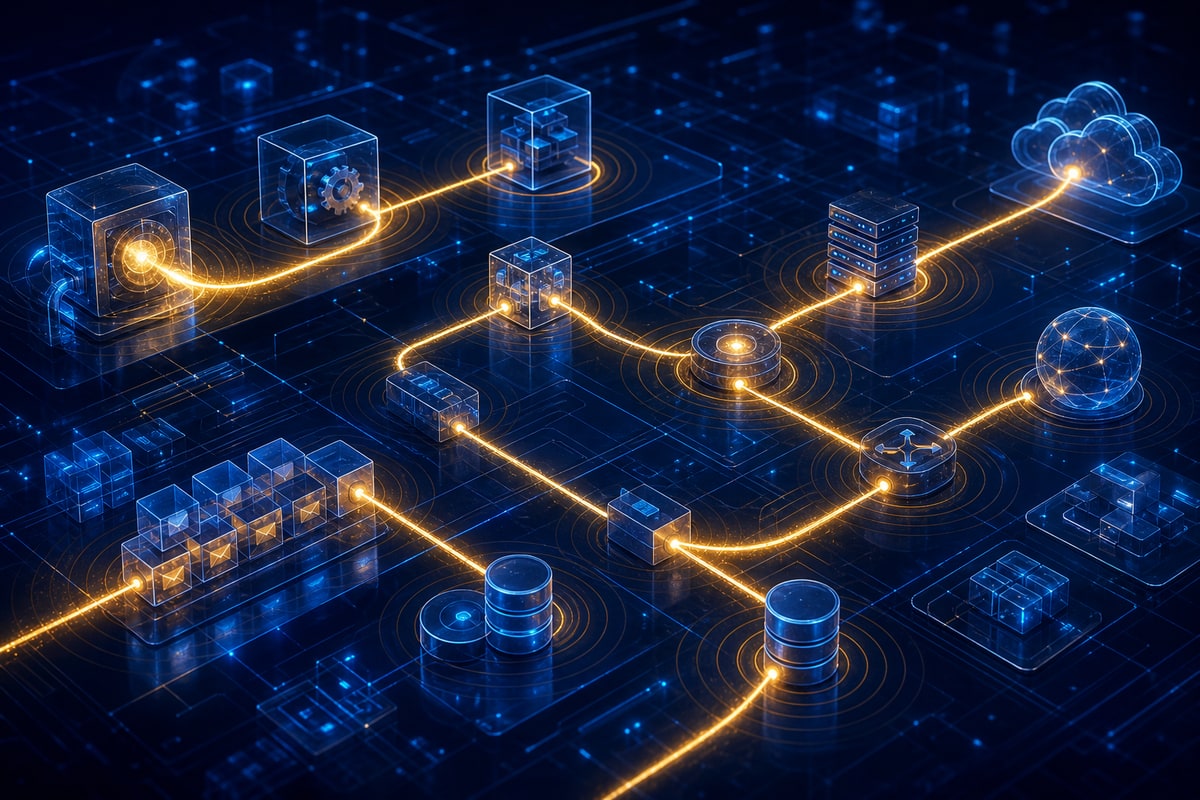
The IoT ecosystem consists of four fundamental layers: the devices and sensors that collect data, the connectivity infrastructure that transmits it, the platforms that store and process it, and the applications that present insights and enable action. Understanding these layers and how they interact is essential for any organisation considering an IoT initiative, because decisions made at one layer have significant implications for performance, security, cost, and scalability at every other layer.
Smart Devices in Consumer and Enterprise Settings
Consumer IoT has become deeply embedded in daily life, often without users fully recognising the extent of their connected ecosystem. Smart home devices, including voice assistants, connected lighting, robotic vacuum cleaners, smart locks, and video doorbells, have moved from novelty to mainstream adoption. Wearable technology, from fitness trackers to smartwatches that can detect irregular heart rhythms, puts health monitoring on the wrist of millions. Connected vehicles provide real-time navigation, over-the-air software updates, and an increasing array of autonomous driving features that rely on continuous data exchange between the car, cloud services, and surrounding infrastructure.
Enterprise IoT, sometimes called the Industrial Internet of Things or IIoT, applies connected device technology to business operations at a much larger scale and with far higher stakes. In manufacturing, IoT sensors monitor machine health, track production output, measure environmental conditions, and feed data into quality control systems. A single modern factory can deploy thousands of sensors generating millions of data points per day, creating a digital representation of the physical production environment that enables real-time visibility and control that was unimaginable a generation ago.
Supply chain and logistics operations have been transformed by IoT visibility. GPS tracking provides real-time location data for vehicles, containers, and individual shipments. Temperature and humidity sensors in refrigerated transport ensure that cold chain integrity is maintained from origin to destination, with automated alerts when conditions deviate from acceptable ranges. Warehouse operations use IoT-enabled picking systems, automated guided vehicles, and smart shelving that tracks inventory levels in real time, reducing errors and accelerating throughput.
Agriculture is another sector experiencing profound IoT-driven transformation. Precision agriculture uses soil moisture sensors, weather stations, drone imagery, and satellite data to optimise irrigation, fertilisation, and pest management at the individual plant or field-zone level. Livestock monitoring systems track animal health, movement, and feeding patterns, enabling early detection of illness and improving herd management. These applications are particularly significant in a world that must produce more food with fewer resources while minimising environmental impact.
The IoT Technology Stack: From Sensor to Insight
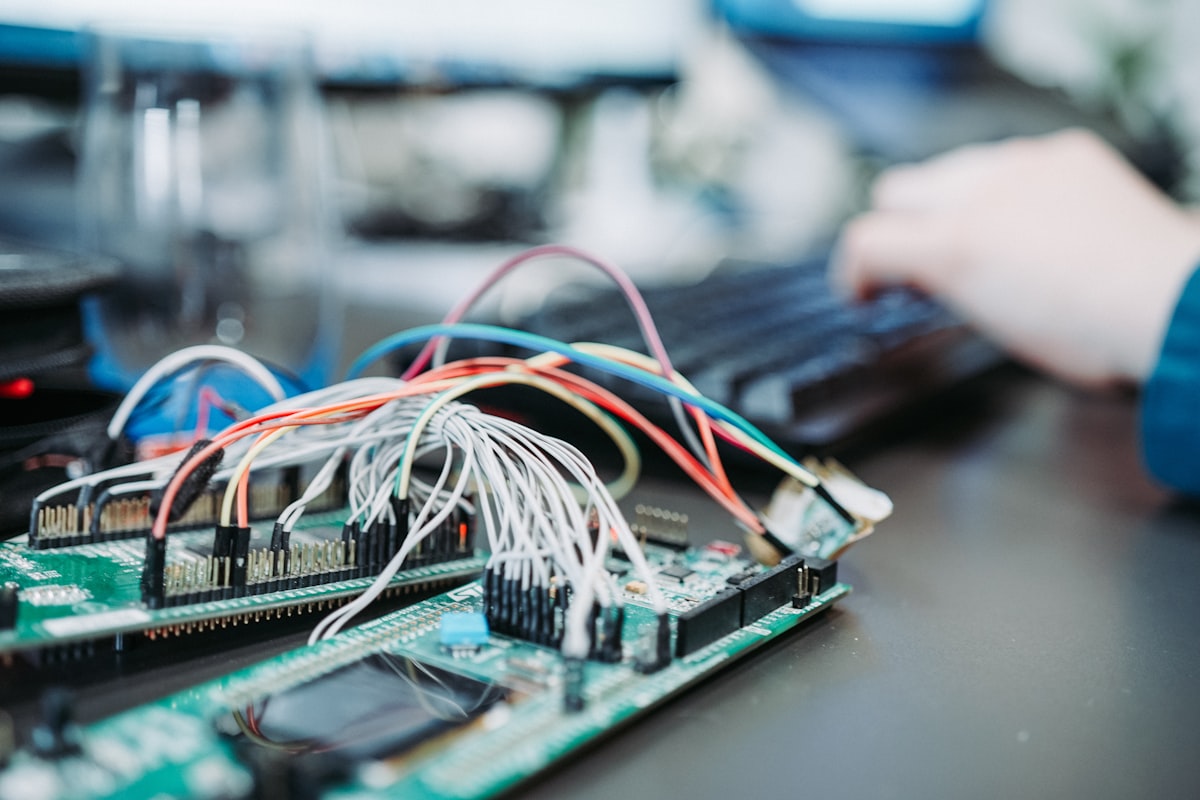
The IoT technology stack begins at the edge with sensors and actuators. Sensors convert physical phenomena, such as temperature, pressure, light, motion, humidity, and chemical composition, into electrical signals that can be digitised and transmitted. Actuators work in the opposite direction, converting digital commands into physical actions such as opening a valve, adjusting a motor speed, or triggering an alarm. The selection of sensors and actuators for an IoT deployment depends on the specific physical parameters being measured, the required accuracy and sampling frequency, the operating environment, and the power budget available to the device.
Connectivity is the bridge between edge devices and the cloud or on-premises systems where data is processed. The choice of connectivity technology is one of the most consequential decisions in IoT architecture, involving trade-offs between range, bandwidth, power consumption, cost, and latency. Short-range technologies like Bluetooth Low Energy and Zigbee suit applications where devices are close together and data volumes are modest. Wi-Fi provides higher bandwidth for applications such as video surveillance but consumes more power. Cellular technologies, including LTE-M and NB-IoT, provide wide-area coverage suitable for devices deployed across cities or rural landscapes. LoRaWAN offers exceptional range and battery life for applications that transmit small amounts of data infrequently.
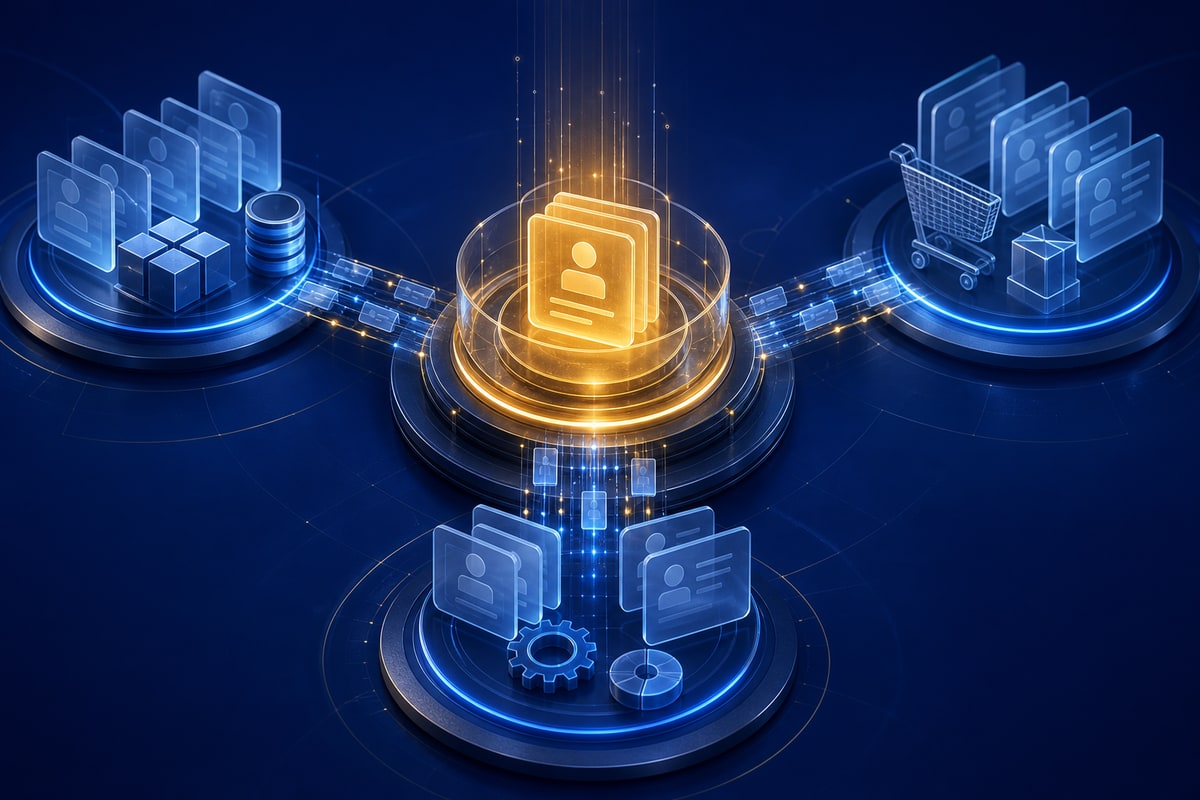
IoT platforms serve as the middleware layer that manages device connectivity, data ingestion, storage, processing, and application enablement. Cloud-based platforms from major providers offer managed services that handle the heavy lifting of device management, data pipelines, and analytics at scale. These platforms provide device registries that track the identity and status of every connected device, message brokers that route data from devices to the appropriate processing services, rules engines that trigger actions based on incoming data, and analytics tools that transform raw data into actionable insights.
The application layer is where IoT data is translated into business value. Dashboards and visualisation tools present real-time and historical data in formats that enable human decision-making. Automated workflows trigger actions based on predefined rules or machine learning models without requiring human intervention. Integration with existing enterprise systems, including ERP, CRM, and supply chain management platforms, ensures that IoT insights are embedded in the business processes where they can have the greatest impact. The gap between collecting data and deriving value from it is bridged at this application layer, and it is often where IoT initiatives succeed or fail.
Security, Privacy, and Interoperability Challenges
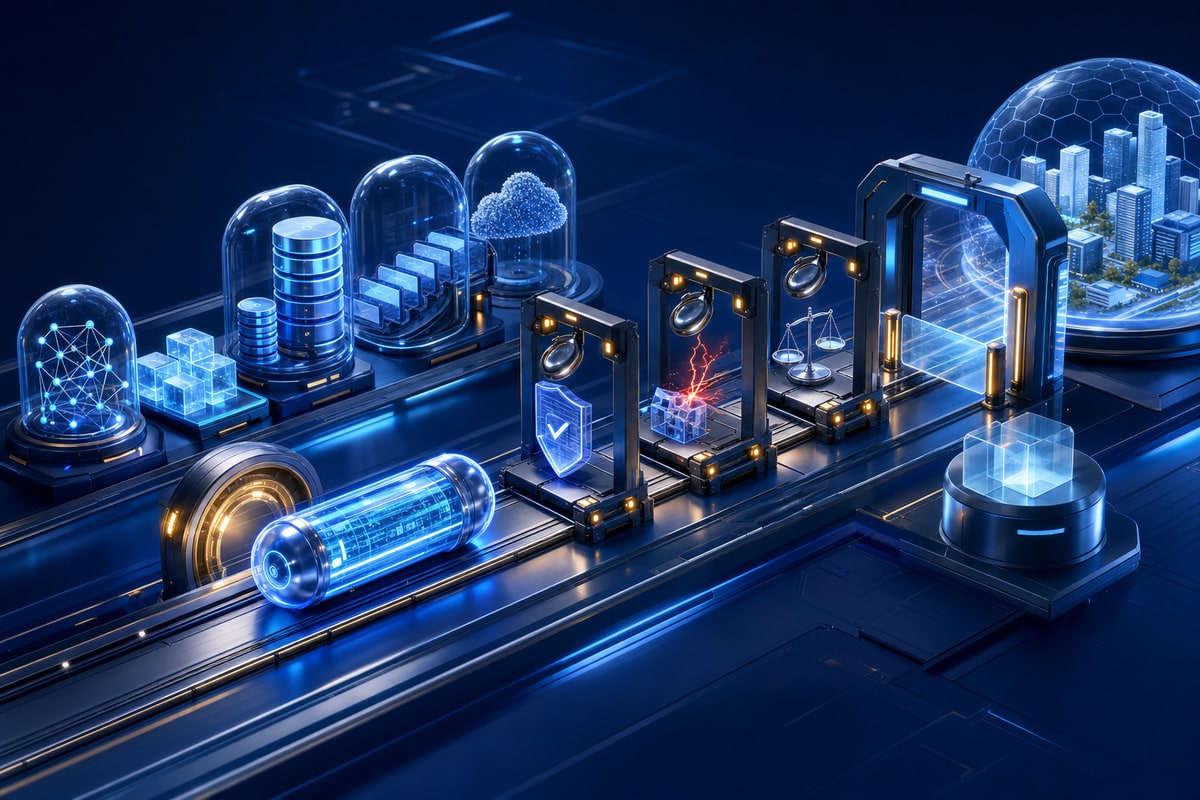
Security is widely recognised as the most significant challenge facing IoT adoption. Every connected device is a potential entry point for cyberattacks, and the sheer number of IoT devices, many of which have limited processing power and cannot run traditional security software, creates an enormous and expanding attack surface. High-profile incidents, such as the Mirai botnet that hijacked hundreds of thousands of IoT devices to launch massive distributed denial-of-service attacks, have demonstrated the real-world consequences of inadequate IoT security.
Securing IoT devices requires a defence-in-depth approach that addresses vulnerabilities at every layer of the stack. At the device level, this means secure boot processes that verify firmware integrity, encrypted storage for sensitive data, and hardware-based security modules that protect cryptographic keys. At the network level, it means encrypted communications, network segmentation that isolates IoT devices from critical business systems, and continuous monitoring for anomalous traffic patterns. At the platform level, it means robust authentication and authorisation, regular security patching, and comprehensive audit logging.
Privacy concerns are particularly acute in consumer IoT, where devices in the home collect intimate data about daily routines, conversations, health conditions, and personal preferences. Regulatory frameworks such as the GDPR in Europe and similar legislation in other jurisdictions impose strict requirements on how personal data collected by IoT devices is stored, processed, and shared. Organisations deploying consumer IoT products must design privacy into their products from the outset, providing users with transparency about what data is collected, meaningful control over how it is used, and the ability to delete their data upon request.
Interoperability remains a persistent challenge in the IoT ecosystem. The absence of universal standards means that devices from different manufacturers often cannot communicate with each other without custom integration work. A smart home might use one protocol for lighting, another for security cameras, and a third for climate control, with no native ability for these systems to interact. Industry alliances such as Matter for smart home devices and OPC UA for industrial IoT are making progress toward standardisation, but the fragmented landscape continues to increase complexity and cost for both consumers and enterprises.
Future Trends Shaping IoT Innovation
Edge computing is emerging as a transformative trend in IoT architecture. Rather than sending all data to the cloud for processing, edge computing performs analysis locally on or near the device itself. This approach reduces latency, lowers bandwidth costs, and enables real-time decision-making for time-critical applications such as autonomous vehicles, industrial safety systems, and augmented reality. As edge processing hardware becomes more powerful and energy-efficient, an increasing share of IoT intelligence will reside at the edge, with the cloud serving as a repository for aggregated data and a platform for training machine learning models.
Artificial intelligence and machine learning are elevating IoT from monitoring and alerting to prediction and autonomous action. Rather than simply reporting that a machine is vibrating abnormally, an AI-enabled IoT system can predict when the machine is likely to fail, recommend the optimal maintenance window, and automatically order replacement parts. In smart buildings, AI learns occupancy patterns and adjusts lighting, heating, and ventilation to minimise energy consumption while maintaining comfort. These AI-driven capabilities transform IoT data from a retrospective record into a forward-looking intelligence asset.
Digital twins, virtual replicas of physical assets or systems that are continuously updated with real-time IoT data, are gaining traction across industries. A digital twin of a wind turbine, for example, receives data from dozens of sensors on the physical turbine and uses simulation models to predict performance under various conditions, optimise maintenance schedules, and test operational changes before implementing them in the physical world. Digital twins are being applied to entire factories, supply chains, cities, and even human bodies, creating a new paradigm for understanding and optimising complex systems.
Sustainability is becoming a major driver of IoT adoption. Connected sensors enable precise monitoring of energy consumption, water usage, emissions, and waste generation across buildings, factories, and supply chains. Smart grid technology balances renewable energy supply with demand in real time. Precision agriculture reduces the use of water, fertilisers, and pesticides. Fleet management IoT optimises routes and driving behaviour to reduce fuel consumption. As environmental regulations tighten and consumers demand sustainable practices, IoT provides the measurement and control capabilities that make meaningful environmental improvement possible at scale.
The convergence of 5G connectivity, edge computing, artificial intelligence, and IoT is creating the foundation for transformative applications that are still in their early stages. Remote robotic surgery with haptic feedback, fully autonomous vehicle fleets, immersive digital experiences that blend the physical and virtual worlds, and smart cities that optimise every aspect of urban living from traffic flow to emergency response are all moving from concept to reality. While the full realisation of these visions will take years, the underlying technology is advancing rapidly, and organisations that develop IoT capabilities today will be best positioned to capitalise on the opportunities that lie ahead.
Need help with implementation?
Get a free consultation with the DualByte team for your business technology needs.